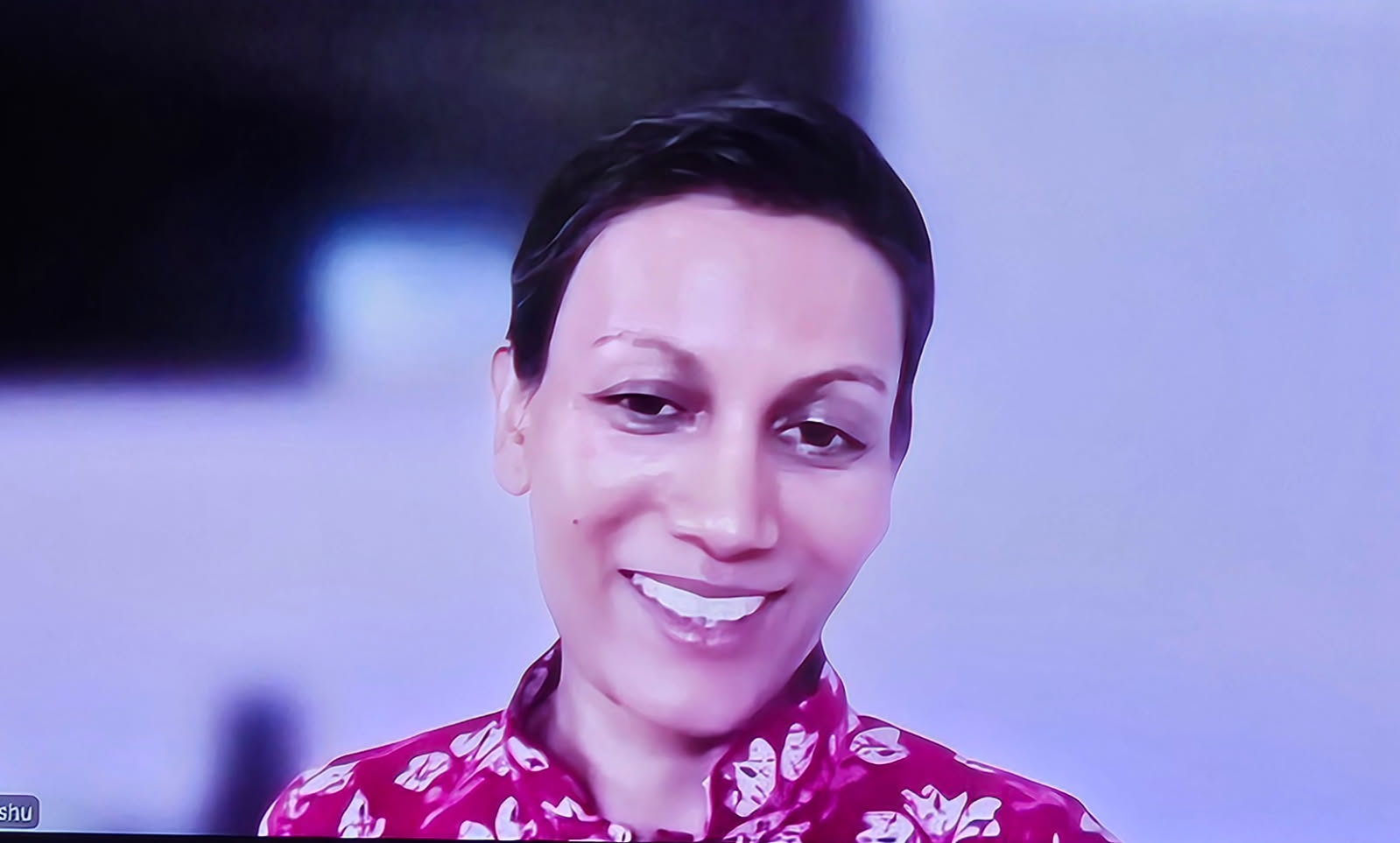
Brookings Rotary welcomed DR. Anshu Chandra, an optometrist and fellow Rotarian, as its program speaker recently. While using a creative and effective method of introducing compelling information about a service that drew on heart strings, Public Image Chair Ann Volin took the opportunity to educate the community about this "eye" opening mission driven by a Rotarian.
You, too, could create press releases that educate and stimulate engagement about the role Rotarians are playing across the world. We have attached the press release created by Ann to help you develop your own feature story from a presenter or innovator who captures your heart. Get the word out there! We are people of Action! Nice Job, Ann and Brookin gs Rotary Club.
Ann Volin, Public Image Chair
Cell: 913.782.7696
E-mail: annvolin@gmail.com
Website: www.brookingsrotary.org
FOR IMMEDIATE RELEASE
DATE: November 3, 2026
Bringing Eye Care to Haiti
Brookings Rotary welcomed Dr. Anshu Chandra, an optometrist and fellow Rotarian, as its program
speaker. Since the speaker was not present in the room, the club played videos of the presentation, with
Dr. Chandra joining via Zoom afterward for a live question and answer session.
Dr. Chandra described starting this work 17 years ago after a mission trip to the Himalayan mountains
where children didn't realize their vision was blurry until given glasses and an elderly population was
losing independence due to untreated vision problems. A pivotal moment came when a blind monk
asked if sunlight could be restored to his world, a case of glaucoma that could not be reversed, which
pushed Dr. Chandra to reconsider turning down two full-time job offers in order to serve where "there
was nobody" providing care.
In 2010, Dr. Chandra began traveling to Fonds-des-Blancs, a rural mountainous village in southern Haiti
with no running water, electricity, or paved roads, where patients lined up overnight, sometimes
sleeping on the floor so that they could receive her clinical care. Recognizing that mobile clinics weren't
sufficient, Dr. Chandra downsized her life, paid off student loans, left New York City, and in 2015 moved
to Haiti with just two suitcases of equipment to build a permanent clinic inside a local hospital space.
She trained local staff from the ground up using whiteboards and hands-on mentorship since most new
staff had no prior medical background.
Within two years, the clinic expanded from a few informal stations to 11 exam stations with advanced
diagnostic equipment. Since then, it has performed more than 143,000 free eye exams and thousands of
sight-saving procedures. The program also pioneered Haiti's first Retinopathy of Prematurity screening
initiative to examine premature babies and launched a school vision-screening program educating
parents and high schoolers on eye health.
However, the hospital currently housing the clinic needs its space back by the end of 2027. The local
community has helped secure donated land from a Haitian diaspora family, and the team now has land,
equipment, and trained staff but must still raise funds to construct reliable utilities and a new building.
A Rotary Arch Klumph Society member has offered to match contributions to the Global Eye Project
(Niskayuna Rotary Club's Eye Project) dollar-for-dollar up to $250,000. Dr. Chandra emphasized this
opportunity exceeds typical Rotary global grants, which do not offer dollar-for-dollar matching, and
asked Rotarians to help spread awareness within their personal and professional networks.
Dr. Chandra highlighted the story of Marie, a patient who lost a leg to diabetes and was losing her sight
before treatment restored much of her vision, allowing her to live independently and sell goods to
support her family, On the question of safety, Dr. Chandra clarified that the clinical's region, Fonds-des-
Blancs, is calm and safe; the Haitian instability reported in the media is concentrated in Port-au-Prince
and its surrounding areas, not the area served by the clinic.
During the live Zoom question and answer, Dr. Chandra explained that patients range from premature
babies to 100-year-olds, with distinct needs across age groups: premature babies are screened over
1,500 times a year for retinopathy, while elderly patients are treated for glaucoma and diabetic and
hypertensive eye diseases. Dr. Chandra noted that training local providers is the key to sustainability,
since patients currently travel for days in order to receive care. Expanding training would let more
primary care clinics open throughout Haiti, so people don't have to travel as far.
The Brookings Rotary Club is part of Rotary International, a global network of volunteers dedicated to
service above self. They support community projects that advance education, environmental
beautification, and humanitarian aid locally and abroad.
The club meets weekly, Tuesdays at 12:00 noon in the American Legion building, 1229 Western Ave.