I still remember the day I first encountered the concept of Positive Peace. It was during my Rotary Peace Fellowship at the University of Bradford in England. The speaker at the seminar was discussing the Global Peace Index by the Institute for Economics and Peace (IEP), and he made an analogy that caught my attention.
He compared the differences between Negative Peace and Positive Peace to the factors that cause a marriage to fail or succeed: “It’s not enough to just avoid conflict,” he said. “A relationship thrives not merely when there is peace, but when it is actively nurtured.”
This sparked my curiosity, so I set off on a journey to learn everything I could about Positive Peace — how it’s not just about preventing violence, but about building the foundations for a peaceful, stable society. Its eight pillars provide a robust framework to assess, plan, and measure peacebuilding projects.
This framework resonated deeply with me, and I’ve since dedicated my life to its promotion, especially in Latin America, where I believe it can transform communities in crisis.
Peacebuilding in Latin America
Latin America faces immense challenges. According to the United Nations, despite representing only 9% of the world’s population, it accounts for a staggering one in four global homicides. Additionally, the Uppsala Conflict Data Program reports that nine of the ten deadliest organized crime conflicts occur in this region.
In response, the Rotary Positive Peace Activators of Latin America have formed a coalition to address conflicts in the region. I was honored to be selected for the second cohort of Latin America’s Rotary Positive Peace Activators Training. This is a key program of the strategic partnership between Rotary International and IEP that began in 2017.Since 2020, the program has trained more than 375 peace activators from 99 countries across eight regions.
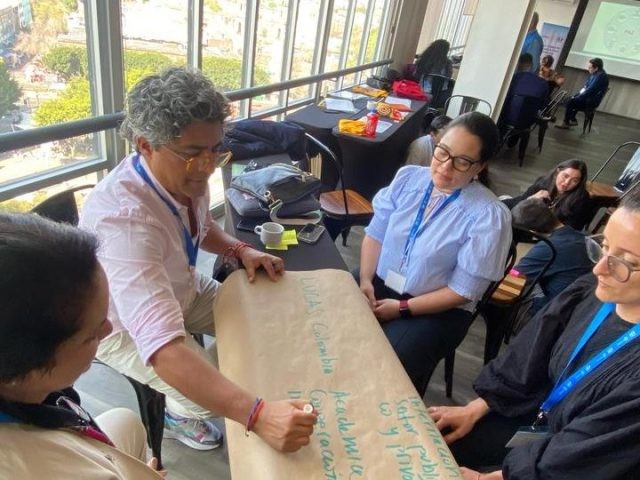
In February, more than 40 peacebuilders from 14 Latin American countries gathered for a three-day training. Our collective goal was to connect, learn from each other, and strengthen our network of peacebuilders regionally and globally. Together, we studied the Positive Peace framework, explored case studies and projects, and engaged with experts on artificial intelligence for peacebuilding.
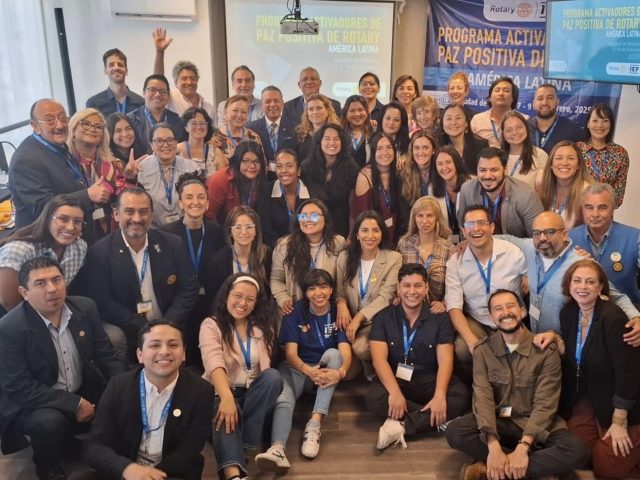
Participants of the Rotary Positive Peace Activators training in Latin America gathered to strengthen their commitment to peacebuilding. Mexico, 2025.
Building a Shared Vision of Change
By the end of the training, we established the Latin America Rotary Positive Peace Activator Network, a community of peacebuilders committed to working together for the next two years. As a group, we agreed on these key priorities:
- Designing and executing projects centered on Positive Peace and its eight pillars
- Creating a platform to unite activators and foster collaboration
- Enhancing internal and external communication
- Developing capacities and promoting knowledge-sharing in Latin America
For me, as a Rotarian and Rotary Peace Fellow, the Rotary Positive Peace Activator program strengthens the Rotary community and expands connections with civil society, academia, governments, and international organizations. We are even exploring the possibility of forming a Rotaract club dedicated to this purpose.
Turning Vision Into Action
Implementing Positive Peace in Latin America presents both challenges and opportunities. The eight-pillar framework provides a valuable tool for designing projects that address key societal issues. One particularly critical area in the region is "equitable distribution of resources." Many communities still struggle with poverty and limited access to essential services, such as water, education, and healthcare. Developing initiatives to reduce income inequalities is essential. Fortunately, tools like Rotary International's Conducting Community Assessment handbook offer recommendations on incorporating Positive Peace into project design.
Additionally, we can leverage IEP’s research, such as the Mexico Peace Index, along with contributions from Rotarians in Zones 25A and 23B, who actively engage in conflict prevention, resolution, and peacebuilding.
And if we implement our service projects through a Positive Peace lens, it’s possible to amplify our results. For example, Rotary’s long-term commitment to polio eradication supports Positive Peace through equitable access to disease prevention, which in turn improves community health and global health. Currently, polio remains endemic in only two countries. Rotary has dedicated vast material and human resources to eradicating this disease through both door-to-door and mass vaccination efforts and by working with partners and community members. I can see expanding our global focus to apply the pillars of Positive Peace in our communities, which will help us increase our impact across Rotary’s areas of focus.
Together, We Build Peace
The partnership between Rotary and IEP, along with the establishment of the Positive Peace Activator network in Latin America, has already strengthened our work. It has provided a structured and strategic approach to fostering lasting peace in our communities. With more and more Rotary members and participants trained in Positive Peace, we can drive meaningful change and together build a more peaceful world.
Connect with a Rotary Positive Peace Activator in your region. Take a free two-hour course through the Rotary Positive Peace Academy, available online in multiple languages.